
Are Sellers More Willing to Negotiate in Northern Virginia?
Yes, sellers in Northern Virginia are more willing to negotiate right now than at almost any point since before the pandemic. Price reductions are up, closing cost credits are back on the table, and inspection repairs are being requested and granted at rates not seen in years. If you've been watching the market and sensed a shift, you're reading it correctly: buyers finally have room to negotiate again. Working with a local Northern Virginia realtor who tracks this shift in real time is often the difference between leaving money on the table and negotiating from a position of strength.

The shift is not subtle. According to NVAR's most recent market report, the average home in Northern Virginia is spending significantly longer on the market than it was a year ago, active listings have climbed sharply, and nationally, nearly two thirds of all homebuyers paid less than the asking price last year, the highest share since before the pandemic, according to Redfin.
So what does this mean for you, whether you're preparing to buy your first home in Fairfax County or thinking about listing your townhouse in Loudoun? This guide breaks down exactly what's driving seller flexibility right now, which concessions are most common, where in NoVA you'll find the most negotiation room, and how both buyers and sellers can position themselves to win in this new environment.
Quick Facts: Seller Negotiation in Northern Virginia
- 30-Year Fixed Mortgage Rate: Currently near the lowest level in roughly three years (Freddie Mac)
- NoVA Average Days on Market: Up more than a third compared to this time last year (NVAR)
- Active Inventory in NoVA: Up more than 20 percent year over year
- NoVA Median Sold Price: Roughly flat to slightly down year over year
- National Trend: Nearly 2 in 3 buyers paid below asking price last year, the highest share since before the pandemic
- Seller Concessions: More than half of sellers nationally expect to offer concessions this year
- Fairfax County Inventory: Up roughly 23 percent year over year
- Months of Supply: Rising steadily in NoVA, still below a fully balanced market but closing the gap quickly
Table of Contents
- What Does "Seller Willingness to Negotiate" Actually Mean Right Now?
- Why This Shift Matters for Buyers and Sellers
- The Economic Forces Behind Seller Flexibility
- How Negotiation Power Has Shifted Over Time
- Where in NoVA Are Sellers Negotiating the Most?
- Concessions Buyers Are Winning Right Now
- How NoVA's Unique Economy Shapes Negotiation
- Pros and Cons: Should Sellers Offer Concessions?
- What Buyers and Sellers Should Do Right Now
- Frequently Asked Questions
- Glossary
What Does "Seller Willingness to Negotiate" Actually Mean Right Now?
When we say sellers are more willing to negotiate in Northern Virginia, we're describing a real shift in how deals get structured across the region and the broader DMV. This isn't just about sellers accepting slightly lower offers. It's an entirely different transaction dynamic, one where buyers have room to ask for things that would have been laughed out of the room just a few years ago.
Seller negotiation in today's market takes several forms. The most visible is a price reduction: a home sitting on the market longer than expected, followed by an adjusted asking price. But the more nuanced forms of negotiation are often more impactful, including closing cost credits, repair allowances, rate buydowns, home warranty inclusions, and flexible settlement timelines.
According to recent survey data, more than half of sellers nationally expect to offer concessions to buyers this year, a share that has jumped significantly compared to prior years. That reflects a real change in the power dynamic. Buyers today arrive at showings armed with data from online valuation tools, AI powered market analysis, and a clear read on comparable sales. They know when a home is overpriced, and they aren't afraid to negotiate.
In Northern Virginia specifically, the latest NVAR data tells a compelling story. Homes are averaging well over 40 days on the market, a sharp increase from a year ago and a dramatic departure from the single digit averages seen during peak competition. More time on market means more leverage for buyers and more pressure on sellers to get creative with their terms.
Why This Shift Matters for Buyers and Sellers
For buyers, the return of real negotiation to the Northern Virginia market represents something many haven't experienced firsthand: actual leverage. During the peak of the pandemic buying frenzy, waiving inspections, offering over asking price, and writing escalation clauses were standard practice just to get a contract accepted. That era is over in most NoVA submarkets, and a closer look at current buyer's or seller's market conditions in Northern Virginia shows just how much that leverage has shifted.
Today, buyers who are financially prepared and pre-approved can negotiate from a position of strength. They can request seller-paid closing costs, ask for repairs after inspections, negotiate on settlement dates, and in many cases submit offers below the asking price with a reasonable expectation of acceptance or a counter-offer.
For sellers, this shift requires a full recalibration of expectations. The "list it high and see what happens" strategy that worked so well a few years ago is actively counterproductive today. Homes priced 5 to 10 percent above market value are sitting, accumulating days on market, and ultimately selling for less than they would have if priced correctly from the start.
Key Insight: The single most important factor in seller success today is accurate pricing at launch. NVAR data shows that homes priced at or slightly below market value are still generating strong activity and multiple offers in many NoVA communities. The homes that struggle, and ultimately face heavy negotiation, are the ones that enter the market overpriced.
This matters for the broader market too. As NAR economists have noted, the housing market is more balanced now than it has been in nearly a decade. Buyers have more choices. Sellers have to be more flexible. That's a significant departure from the pandemic years, when sellers held nearly all of the leverage.
The Economic Forces Behind Seller Flexibility
Several converging economic factors are driving the increase in seller willingness to negotiate in Northern Virginia. Understanding these forces helps explain why this isn't just a blip. It's a structural shift that's likely to persist for the foreseeable future.
Mortgage rates are lower but still elevated. The 30-year fixed rate has recently dropped to its lowest level in roughly three years, according to Freddie Mac, down close to a full percentage point from where it stood a year earlier. Lower rates have improved buyer purchasing power, but rates remain more than double the levels seen a few years before that. Many buyers remain payment sensitive and need concessions to make deals work financially.
Inventory is rising steadily. Active listings in Northern Virginia have climbed more than 20 percent from the prior year. Fairfax County inventory is up roughly 23 percent year over year. Across the broader NoVA region, inventory is projected to keep climbing throughout the year depending on the county. More supply gives buyers more options, and less urgency to accept unfavorable terms.
| Market Indicator | Year Ago | Current | Change |
|---|---|---|---|
| Avg. Days on Market (NoVA) | 31 days | 42 days | Up 35.5% |
| Active Listings (NoVA) | 1,260 | 1,526 | Up 21.1% |
| Median Sold Price (NoVA) | $685,000 | $675,000 | Down 1.5% |
| Months of Supply (NoVA) | 0.92 | 1.10 | Up 19.9% |
| New Pending Sales (NoVA) | 933 | 1,001 | Up 7.3% |
| 30-Year Mortgage Rate | 6.85% | 6.01% | Down 0.84 pts |
Sources: NVAR market report, Freddie Mac PMMS
The economy is sending mixed signals. Federal workforce reductions, trade uncertainty, and stubborn inflation in certain sectors have made many consumers cautious about large purchases. The Fed has held rates steady at its most recent meeting and has signaled a wait and see approach. This economic uncertainty is keeping some buyers on the sidelines, which further reduces competition and gives active buyers more negotiating room.
Pent-up seller supply is finally hitting the market. Many homeowners who deferred listing in recent years due to the mortgage rate lock-in effect are now entering the market as rates approach multi-year lows. This is adding to inventory and creating more competition among sellers, particularly in the $600K to $900K price range that dominates much of Fairfax and Loudoun counties. For sellers still weighing their timeline, reviewing what sellers can still adjust before listing can help turn this competition into an advantage rather than a setback.
How Negotiation Power Has Shifted Over Time
To fully appreciate where we are today, it helps to look at how the seller-buyer power dynamic has evolved in Northern Virginia over the past several years.
Peak seller dominance. Rock-bottom mortgage rates created a frenzy. Homes in Fairfax, Loudoun, and Prince William counties routinely received ten to twenty or more offers within days. Buyers waived inspections, waived appraisal contingencies, and offered tens of thousands over asking. Sellers had zero incentive to negotiate on anything, and days on market in NoVA fell as low as a single week in peak months.
The rate shock. When mortgage rates surged past 7 percent, buyer demand dropped sharply. But inventory remained tight because sellers didn't want to give up their locked-in low rates. The result was a standoff: fewer sales, but prices held relatively firm. Negotiation was limited because there simply wasn't much activity on either side.
The slow thaw. Rates began to moderate, and life events (job changes, growing families, divorces, retirements) started forcing more homeowners to list despite less than ideal rate conditions. Inventory began climbing. Days on market started creeping up. Buyers who were still active began to find that sellers were willing to discuss terms, a meaningful shift from prior years.
The turning point. NVAR data showed that months of supply in Northern Virginia sustained its highest level in years for most of the following stretch. That sustained rise was a dramatic change from the sub 0.5 levels seen during the pandemic. Buyers had more choices, more time, and increasingly more power at the negotiating table. By the following fall, seller concessions and price reductions had become common across most NoVA jurisdictions.
The new normal. We've entered what Redfin economists have called the "Great Housing Reset." It's not a crash, and it's not a recession-driven correction. It's a gradual normalization where affordability slowly improves, negotiation becomes standard practice, and both buyers and sellers need strategy, not just luck, to succeed. For buyers ready to take advantage of this environment, exploring current listings in Northern Virginia is a strong first step.
Where in NoVA Are Sellers Negotiating the Most?
Real estate is hyper-local, and negotiation dynamics vary significantly across Northern Virginia's jurisdictions. Here's what the data shows about where buyers are currently finding the most flexibility.
Alexandria: Among the strongest negotiation environments in NoVA right now. Average days on market has climbed to around 58 days, well above the regional average. Inventory increases have been pronounced, and sellers in the city are increasingly open to price adjustments and closing cost credits to attract offers.
Fairfax County: The region's largest market is showing clear signs of softening negotiation leverage for sellers. Inventory is up roughly 23 percent year over year, and much of that increase comes from carryover listings that hit the market last fall and haven't sold yet. These stale listings represent strong opportunities for buyers willing to make reasonable offers with concession requests.
Prince William County: An interesting case. Closed sales actually increased close to 18 percent year over year, making it the standout performer in the region. However, average days on market (roughly 35 days) is still elevated compared to pandemic-era levels, and sellers are actively offering concessions, particularly in the new construction segment, where builders are competing for buyers with rate buydowns and closing cost incentives. Homeowners here weighing whether to sell now or wait in Prince William County should factor this negotiation activity into the math.
Arlington County: Still one of the more competitive markets in NoVA, but even here the dynamics are shifting. Sales volume has pulled back recently, and while premium pricing continues for well-located properties near Metro stations and the Amazon HQ2 corridor, sellers of older condos and homes needing updates are finding they need to be flexible on price and terms.
Loudoun County: Notably, Loudoun is the one NoVA jurisdiction where inventory is essentially flat compared to the year before, meaning there's less negotiation room here than in other parts of the region. However, new construction communities in western Loudoun and the Brambleton and Ashburn corridor are offering builder incentives that effectively function as seller concessions.
Local Tip: Across all jurisdictions, the homes where sellers are most willing to negotiate share common traits. They've been on the market for 30 or more days, they were priced above comparable sales at listing, or they need cosmetic or functional updates that today's buyers aren't willing to absorb without a credit. If you're house-hunting and want to know which properties in your target area have the most negotiation potential, working with a local agent who monitors days on market and price history is essential.
Sellers who want to understand exactly where their home fits within this shifting landscape should start by getting a realtor home valuation before making any listing decisions. Pricing strategy is everything right now.
Concessions Buyers Are Winning Right Now
The types of concessions being negotiated today go well beyond simple price reductions. Much of this shift traces back to how the NAR settlement changed seller concessions in Virginia, which reshaped who pays for what at the closing table. Here's what buyers across the DMV are successfully securing in today's market, and what each one means financially.
Closing cost credits: This is the most common concession right now. Sellers agree to credit a portion of the buyer's closing costs, typically ranging from $5,000 to $15,000 depending on the purchase price. For a buyer purchasing a $700,000 home in Fairfax County, a 2 percent closing cost credit equals $14,000 in savings at the settlement table. Conventional loans allow up to 3 percent in seller concessions for buyers putting less than 10 percent down, up to 6 percent for those putting 10 to 25 percent down, and up to 9 percent for buyers with 25 percent or more equity.
Mortgage rate buydowns: An increasingly popular concession where the seller funds a temporary interest rate reduction. A 2-1 buydown on a $500,000 loan can lower the buyer's monthly payment by roughly $600 in the first year. This is often more valuable to the buyer than a straight price reduction of the same dollar amount, and it keeps the seller's recorded sale price higher, which protects neighborhood comps.
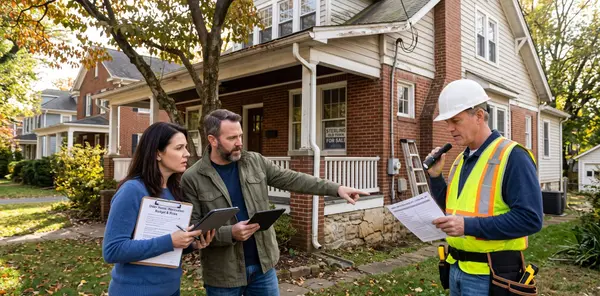
Repair credits and inspection concessions: After years of buyers waiving inspections entirely, the pendulum has swung. Buyers today are routinely requesting inspections and asking sellers to either make repairs or provide a credit toward identified issues. HVAC systems, roof age, plumbing concerns, and foundation issues are all back on the negotiation table. Buyers weighing a cash offer for my house option, whether as a buyer negotiating tool or a seller weighing a faster exit, should understand how these credits interact with financing before making a decision.
Home warranties: Sellers offering a one-year home warranty, typically $400 to $600, as a sweetener has become commonplace, particularly for homes with older mechanical systems.
Flexible settlement dates: In a less frantic market, sellers are more willing to accommodate buyer-preferred timelines, including extended settlements for those selling a current home or waiting on lease expirations.
| Concession Type | Typical Value | Best For | Loan Limits |
|---|---|---|---|
| Closing Cost Credit | $5K to $15K | Cash-strapped buyers | 3% to 9% (Conv.) |
| 2-1 Rate Buydown | $8K to $12K | Payment-sensitive buyers | Within IPC limits |
| Repair Credit | $3K to $10K | Older homes w/ issues | Varies by lender |
| Home Warranty | $400 to $600 | Peace of mind | No cap |
| Price Reduction | $10K to $30K+ | Overpriced listings | N/A |
| VA Concessions | Up to 4% | Military buyers | 4% + closing costs |
Source: Fannie Mae guidelines, VA loan program, industry data
Ready to see what concessions you could negotiate on your next home, or how to price your listing to stay competitive?
How NoVA's Unique Economy Shapes Negotiation
Northern Virginia doesn't behave like the rest of the country when it comes to real estate. The region's economy, anchored by the federal government, defense contracting, technology companies, and a deep bench of cybersecurity firms, creates dynamics that directly influence when and how sellers negotiate.
Federal workforce uncertainty: Mass layoffs across several federal agencies over the past year introduced real uncertainty into NoVA's housing market. While the full impact has yet to be fully realized, NVAR has noted that government employees facing potential job changes are sometimes more motivated to sell quickly, and more willing to negotiate on terms to close before their employment situation shifts. At the same time, some federal buyers have paused their searches due to job uncertainty, reducing competition.
Tech sector resilience: Despite federal headwinds, Northern Virginia's economy has diversified significantly. Amazon's HQ2 in Arlington, data center expansion in Loudoun and Prince William counties, and a growing ecosystem of AI and cybersecurity companies provide a strong economic foundation. In neighborhoods near these employment centers, seller leverage tends to be stronger because buyer demand from tech workers remains consistent.
Military PCS cycles: The DMV is home to several major military installations. PCS (Permanent Change of Station) season, which peaks in summer, creates predictable patterns of both buying and selling activity. Military buyers using VA loans, which allow sellers to contribute up to 4 percent in concessions beyond standard closing costs, represent a significant buyer pool in Prince William, Stafford, and parts of Fairfax County. Sellers in these areas who are willing to accept VA offers with concessions often close faster than those who resist.
For homeowners thinking about whether now is the right time to list, understanding how these local economic factors affect your specific neighborhood is critical. A home near a Metro station in Tysons will experience very different demand dynamics than a single-family home in Gainesville. The strategy that maximizes your net proceeds depends entirely on this local context. One way sellers in the DMV are protecting their bottom line is by working with a low commission realtor team that still delivers full-service marketing and negotiation expertise.
Pros and Cons: Should Sellers Offer Concessions?
For sellers in Northern Virginia weighing whether to offer concessions proactively or wait for buyers to ask, the answer depends on your specific situation, timeline, and financial goals. Here's an honest breakdown of the trade-offs.
Pros of offering concessions:
- Faster sale: Homes with proactive concession offers (like a rate buydown or closing cost credit included in the listing) tend to attract more showings and offers. In a market where homes average 42 days on the market, anything that shortens that timeline reduces your carrying costs and emotional stress.
- Preserved headline price: A $10,000 closing cost credit achieves a similar net result to a $10,000 price reduction, but it keeps your recorded sale price higher. That matters for neighborhood comps and future appraisals, protecting your neighbors' values and your own if you own other property nearby.
- Attracts payment-sensitive buyers: Many of today's buyers can afford the purchase price but struggle with the cash needed at closing. Concessions solve this problem and expand your buyer pool significantly.
- Competitive advantage: As spring inventory increases, sellers who offer concessions stand out against competing listings that don't, especially in the $500K to $800K range, where buyer sensitivity to total cost is highest.
Cons of offering concessions:
- Lower net proceeds: Every dollar in concessions comes directly off your bottom line. A $10,000 credit means $10,000 less in your pocket at settlement.
- Appraisal risk: If you inflate the purchase price to offset concessions (for example, listing at $510,000 with $10,000 in credits instead of $500,000 flat), you risk the appraisal coming in low, which can kill the deal or require renegotiation.
- Perception issue: In some cases, prominently advertising concessions can signal desperation to buyers, potentially leading to even lower offers.
- Not necessary in every submarket: Well-priced homes in high-demand locations (Metro-adjacent, top school districts, new construction) are still selling quickly and often without concessions. Offering them unnecessarily leaves money on the table.
The key takeaway for sellers: concessions aren't a sign of defeat, they're a strategic tool. The number that matters most is your net proceeds after all costs, not the sticker price. An experienced agent can model exactly how different concession scenarios affect your bottom line and advise on the approach that makes the most financial sense for your specific property and timeline. Understanding your realistic seller closing cost picture before you list means you're working from accurate numbers instead of guesswork.
It's also worth reviewing the full range of real estate commission options available to you before you commit to a listing strategy, since the right fee structure can absorb concessions without eating into your equity.
What Buyers and Sellers Should Do Right Now
Whether you're looking to buy or sell in Northern Virginia this season, the current negotiation environment rewards preparation and strategy over gut instinct. Timing plays a role too, and our breakdown of the best time to sell a house in Virginia pairs well with the negotiation strategy below. Here's what each side should be doing right now.
If you're a buyer:
- Get pre-approved immediately. Sellers are more willing to negotiate with buyers who present clean, pre-approved offers. A pre-approval letter with your offer tells the seller you're serious and financially capable, making them more likely to accept your concession requests.
- Target homes with 30 or more days on market. These sellers are statistically most likely to negotiate on price, closing costs, or terms. Ask your agent to set up alerts for listings that have crossed the 30-day threshold in your target areas.
- Ask for concessions strategically. Instead of blanket demands, tie your concession requests to specific needs. A closing cost credit request supported by a strong offer price is more likely to be accepted than a lowball offer with aggressive terms.
- Consider a rate buydown over a price cut. If you're sensitive to monthly payments, a seller-funded 2-1 buydown may save you more money over the first two years than a comparable price reduction. Discuss this option with your lender and agent.
- Don't wait for the "perfect" rate. With the 30-year fixed rate near its lowest level in years and plenty of inventory available in the NoVA market, the combination of negotiation power and improved affordability may not last once spring competition heats up.
If you're a seller:
- Price right from day one. The data is clear: overpriced homes sit, accumulate days on market, and ultimately sell for less than properly priced homes. Use a detailed comparative market analysis that accounts for current conditions, not last year's comps.
- List early in the spring window. Sellers who list in the February through April window face less competition from other listings while capturing early-season buyer demand. Inventory is projected to keep rising throughout the year, so earlier is generally better.
- Be prepared to negotiate, but negotiate smart. Offering a closing cost credit often produces a better net result than repeated price cuts. Model different scenarios with your agent before listing so you know your walk-away numbers.
- Invest in presentation. Professional photography, staging, and strong digital marketing are not optional anymore. Buyers have more choices and they're comparison shopping aggressively. The homes that sell fastest and with the least negotiation are the ones that look great online and in person.
- Protect your net proceeds on commission. In a market where concessions may reduce your gross, if you're ready to move forward, you can sell your home with a team built around full-service marketing and skilled negotiation, without sacrificing your bottom line.
Navigate a Negotiation-Friendly Market with Confidence
Whether you're buying your first home or selling for maximum net proceeds, The Jamil Brothers Realty Group is here to help you make the smartest move in today's negotiation-friendly market. Call us at 703-782-4830.
Frequently Asked Questions
Are sellers really negotiating more in Northern Virginia than in previous years?
Yes. Multiple data points confirm this trend. Northern Virginia homes are averaging around 42 days on the market, up more than a third from a year earlier. Active inventory has risen over 21 percent, and nationally, nearly two thirds of buyers paid below asking price last year, the highest share since before the pandemic. Over half of sellers expect to offer concessions this year.
What types of concessions are most common in Northern Virginia right now?
The most common concessions include seller-paid closing cost credits (typically $5,000 to $15,000), mortgage rate buydowns, repair credits following home inspections, home warranty inclusions, and flexible settlement timelines. Rate buydowns have gained particular popularity because they address monthly payment concerns without reducing the recorded sale price.
How much can a seller contribute toward buyer closing costs?
For conventional loans, the limit depends on down payment: up to 3 percent of the purchase price with less than 10 percent down, up to 6 percent with 10 to 25 percent down, and up to 9 percent with 25 percent or more down. FHA loans allow up to 6 percent. VA loans allow 4 percent in specific concessions plus unlimited coverage of standard closing costs and discount points.
Is it better for a seller to reduce the price or offer a closing cost credit?
In most cases, a closing cost credit produces a better outcome for both parties. It keeps the recorded sale price higher (protecting comps), directly reduces the buyer's cash needed at closing, and can be targeted toward rate buydowns or specific fees. That said, the right choice depends on the specific deal structure, appraisal considerations, and the buyer's loan program.
What mortgage rate should buyers expect this spring?
The 30-year fixed rate has recently averaged around 6.01 percent according to Freddie Mac, its lowest level in roughly three years. Most forecasters expect rates to hover in the low 6 percent range through the first half of the year, with the possibility of dipping into the upper 5 percent range later on if the Fed delivers additional cuts.
Which NoVA counties have the most negotiation room for buyers right now?
Alexandria and parts of Fairfax County currently offer the most negotiation room, with days on market reaching 58 and 42 plus days respectively. Arlington and Loudoun remain more competitive in desirable corridors. Prince William County has seen strong sales activity but still offers negotiation opportunities, especially in new construction communities where builders are actively competing for buyers.
Should sellers offer concessions upfront when listing their home?
It depends on the property and submarket. In areas with high inventory and longer days on market, proactively advertising a rate buydown or closing cost credit can differentiate your listing and attract more showings. In still-competitive areas with limited inventory, it's often better to wait and negotiate concessions as part of offer discussions rather than leading with them.
How do federal workforce changes affect seller negotiations in NoVA?
Federal layoffs and hiring uncertainty have created a two-directional effect. Some government employees facing job changes are more motivated to sell quickly and are willing to negotiate aggressively on terms. At the same time, federal workers uncertain about their future are pausing home searches, reducing buyer competition. The net effect varies by jurisdiction, with areas closest to federal employment centers feeling the impact most directly.
What is the "Great Housing Reset" and how does it affect negotiations?
Coined by Redfin economists, the Great Housing Reset describes a multi-year period of gradual normalization where affordability slowly improves as income growth outpaces home price growth. For negotiations, this means the extreme seller leverage of the pandemic years is not coming back any time soon. Both buyers and sellers should expect negotiation to be a standard part of every transaction moving forward, a return to pre-pandemic norms rather than a sign of market weakness.
When is the best time to buy or sell in NoVA?
For buyers, the February through April window offers the best combination of seller flexibility, lower competition, and rates near multi-year lows. For sellers, listing early in the spring window (before May) allows you to capture rising buyer demand while facing less competition from other sellers. Inventory is projected to increase through the year, making earlier listings more strategically advantageous.
Glossary
Seller Concession
Anything of value a seller agrees to provide a buyer to help close the deal, such as a closing cost credit, repair allowance, or rate buydown.
Days on Market (DOM)
The number of days a listing has been actively for sale before going under contract. Longer DOM generally signals more negotiating room for buyers.
Months of Supply
An estimate of how long current inventory would last at the current sales pace. Below five to six months is generally considered a seller's market.
Rate Buydown
A concession where the seller (or lender) pays to temporarily or permanently lower a buyer's mortgage interest rate, reducing the monthly payment.
Closing Cost Credit
A dollar amount the seller agrees to contribute toward the buyer's closing costs, reducing the cash the buyer needs to bring to settlement.
Appraisal Gap
The difference between the agreed purchase price and the appraised value of a home, which can affect financing and negotiation strategy.
Escalation Clause
A contract provision allowing a buyer's offer to automatically increase up to a set limit if a competing offer comes in higher.
Seller Net Sheet
A detailed estimate showing a seller's proceeds after commission, taxes, fees, and any negotiated concessions are subtracted from the sale price.
Categories
- All Blogs (1227)
- Aldie (3)
- Ashburn (6)
- Buyer Guide (8)
- Buying a home (2)
- Buying Strategies (30)
- festivals (1)
- General Blog (67)
- Leesburg (5)
- Market Intelligence (29)
- Market Updates (8)
- Notable Properties For Sale (32)
- Real Estate Tips, News, and More (385)
- Seller Guide (2)
- Seller Guides (60)
- Selling Your Home (522)
- Sterling (6)
- Top Realtors in Northern Virginia (58)
Recent Posts



Message Sent!
Thank you for reaching out. Arslan & Saad have received your details and will be in touch shortly.
Need immediate assistance? Call or text 703-782-4830.